ManyChat vs Com.bot for Facebook Messenger Automation in 2026
Choosing between ManyChat and Com.bot for Facebook Messenger comes down to how many channels you actually run. If your customers message you on Messenger, WhatsApp, and Instagram, juggling separate tools costs your team hours every week. This comparison settles that decision with specifics.
You will see how both platforms handle multi-channel automation, visual bot building, bulk messaging, and security at scale. You will also get a clear breakdown of pricing structures and total cost of ownership, plus direct guidance on which option fits your business in 2026.
Quick Verdict: ManyChat vs Com.bot for Facebook Messenger Automation in 2026
If you need a no-code chatbot builder with advanced AI and multi-channel support, Com.bot is the stronger choice; ManyChat remains a solid option for straightforward Messenger automation. Both platforms handle the basics of Facebook Messenger automation well, but they aim at different needs.
Com.bot pairs AI-powered chatbots with natural language processing, intent recognition, and entity extraction. It also runs WhatsApp, Instagram, and Messenger from a single platform, so conversational marketing stays consistent across channels.
ManyChat leans on a visual flow builder that suits teams wanting simple, hand-built Messenger and Instagram journeys. That approach works well for predictable conversations, though it can feel limiting when users expect more flexible, AI-driven replies.
Reliability matters at scale, and Com.bot's numbers speak plainly. It is an official Meta Business Partner with 23,000+ active customers, 100+ government bodies, 500+ global partners, 100K+ bots created, and 25M+ messages processed daily. That points to enterprise-grade dependability.
In short, Com.bot fits teams that want AI depth and multi-channel reach, while ManyChat suits those who prefer a familiar drag-and-drop editor for simpler Messenger bots. The sections below break down features, pricing, and use cases in detail.
At a glance: how Com.bot compares to ManyChat, Com.bot for Facebook Messenger Automation in 2026 on the features that matter most.
| Feature | Com.bot | ManyChat | Com.bot for Facebook Messenger Automation in 2026 |
|---|---|---|---|
| Messenger Automation Tools | ✓ | ✓ | — |
What Is Com.bot?
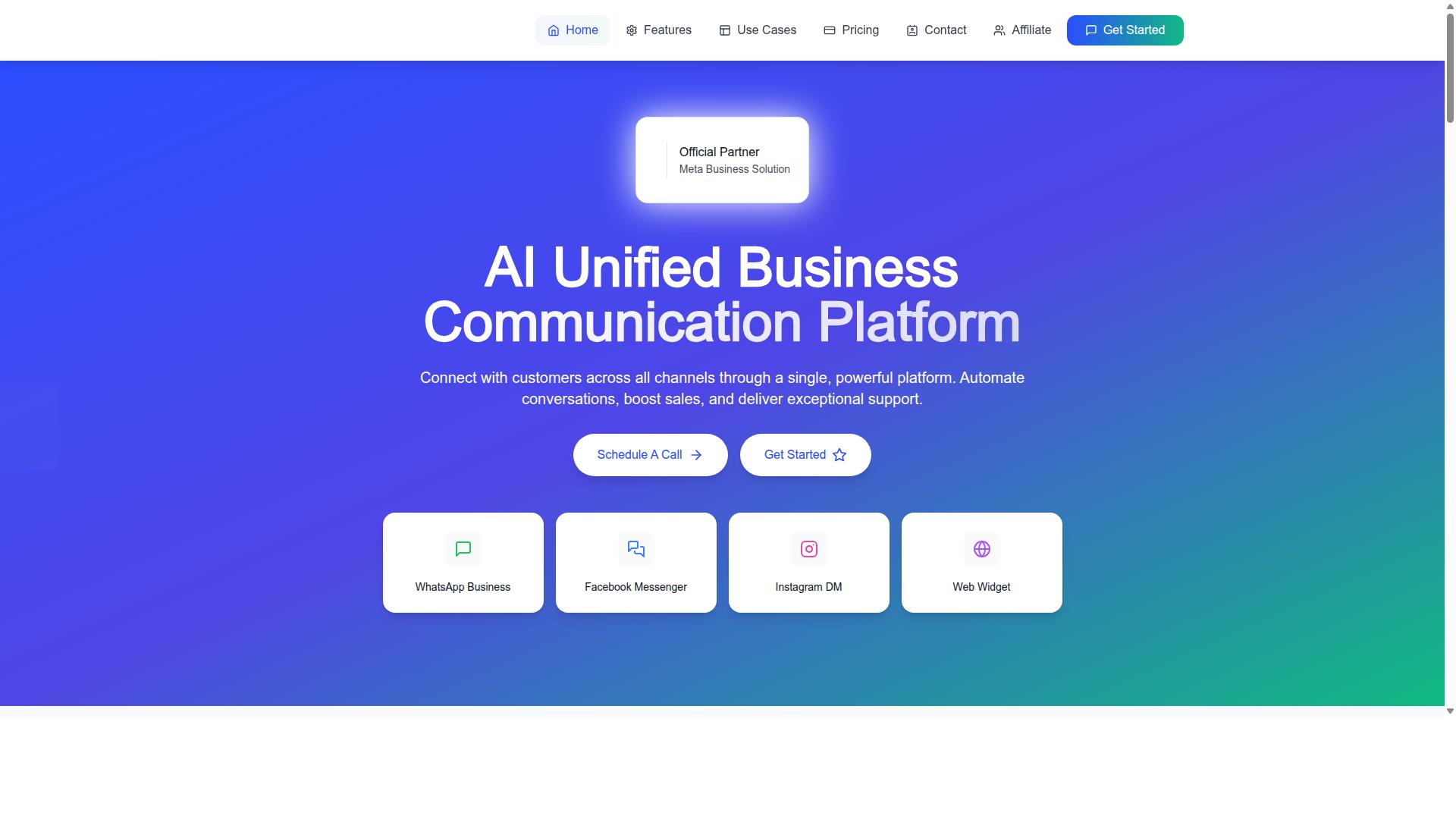
Com.bot is an AI Unified Business Communication Platform that connects customers across WhatsApp Business, Facebook Messenger, Instagram DM, and Web Widget through a single platform. It is built for organizations that want to automate conversations, boost sales, and deliver support from one place instead of juggling separate tools.
Owned and managed by Com Bot AI Limited, the platform is an Official Meta Business Partner with direct WhatsApp Business API integration. That status matters for Messenger automation because it signals a sanctioned connection to Meta's messaging ecosystem rather than a workaround.
Com.bot serves businesses in 50+ countries. Its audience spans small and mid-sized businesses, government bodies, and enterprises that need multi-channel customer support and bulk messaging at scale.
At the center of the product is a drag-and-drop visual bot builder. A unified team inbox then brings agent replies and bot activity into one shared workspace.
Com.bot also supports native payments for WhatsApp transactions, so a conversation can move from inquiry to purchase without leaving the chat. For AI-driven interactions, the platform offers AI-powered chatbots with natural language processing.
In short, Com.bot is a multi-channel automation and support platform with AI at its core. For a Facebook Messenger automation comparison in 2026, that combination of official Meta integration, visual flow building, and AI is the foundation to weigh against ManyChat.
What Is ManyChat?
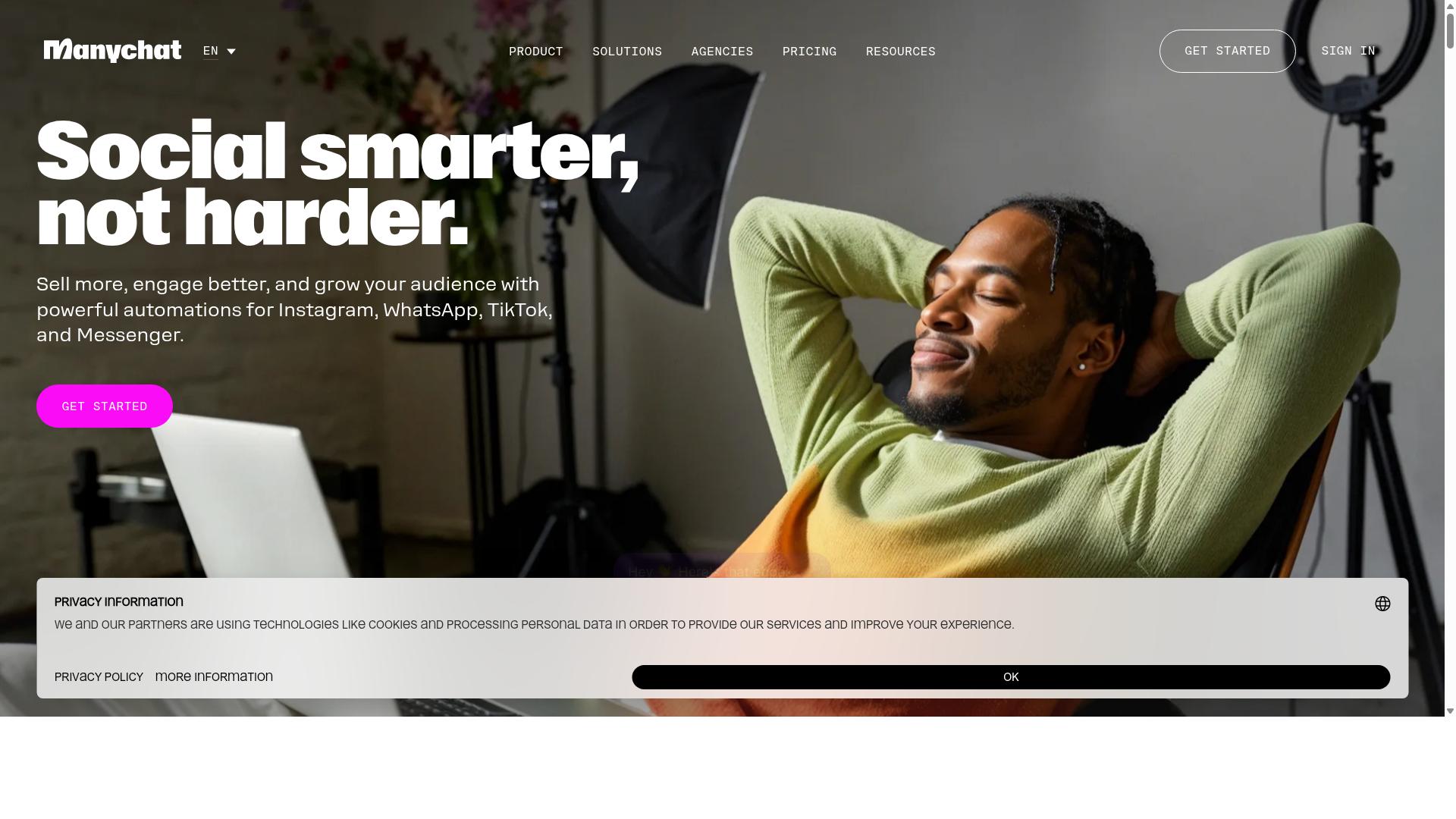
ManyChat is a popular chatbot platform known for its Facebook Messenger automation and visual flow builder, widely used for conversational marketing and subscriber engagement. It is primarily a no-code chatbot builder, meaning marketers can assemble automated conversations without writing code.
The platform centers on Meta's messaging channels, chiefly Facebook Messenger and Instagram. Businesses use it to greet new contacts, answer common questions, qualify leads, and route people to a human when needed. Its drag-and-drop editor keeps setup approachable for teams without developer resources.
Like most chatbot platforms in this category, ManyChat is strongest when the conversation follows predictable paths. Its visual flow builder maps out those paths as connected blocks, which makes the logic easy to see and adjust. For straightforward FAQ handling and lead capture, that structure works well.
Where the tool has traditionally been lighter is in open-ended conversation. Handling unexpected phrasing, extracting specific details from a messy message, or generating a fresh reply on the fly are harder problems than branching menus. ManyChat has added AI-related capabilities over time, but its foundation remains rule-based flow design rather than AI-powered chatbots built around natural language processing.
That distinction matters for the comparison in this article. ManyChat is a focused tool for Meta's messaging ecosystem, while Com.bot is positioned as a broader multi-channel approach. Readers weighing the two should think about where their conversations actually happen, and whether they need depth on Messenger alone or reach across several channels.
To understand what ManyChat offers day to day, it helps to look at the features that come up most often in reviews and tutorials. These generally fall into four groups:
- Broadcast messaging for sending a single message to many subscribers at once
- Subscriber segmentation and audience targeting to group contacts by behavior or interest
- Tags and custom fields, also called user attributes, for storing details about each person
- Comment-to-Messenger growth tool, which turns public comments on posts or ads into private conversations
Each of these is a standard building block in conversational marketing. Broadcast messaging helps a business re-engage its list, while segmentation keeps those messages from feeling generic. Tags and custom fields feed personalization, and the comment-to-Messenger growth tool is a common way to convert social engagement into direct conversations.
ManyChat also supports conditional logic inside flows, so a conversation can branch based on what a subscriber does or which attributes they carry. That enables drip campaigns and sequence automation, where messages are spaced out over time rather than sent all at once. Chatbot templates and pre-built flows shorten setup for common use cases.
Newer versions of the platform have moved toward generative AI responses, with ChatGPT integration and OpenAI API connections appearing across the category. These additions are typically optional and layered on top of the existing flow structure. They can make replies feel more natural, but they do not change the underlying model of a mostly scripted conversation.
For a business that lives entirely inside Facebook Messenger and Instagram, this feature set covers the essentials well. The trade-off is scope. A tool built around one company's messaging channels may feel limiting once a team wants the same automation logic to run elsewhere, or wants conversations to lean more heavily on intent recognition and entity extraction than on hand-built branches.
That is the gap Com.bot's multi-channel positioning speaks to. The sections that follow compare the two platforms on the dimensions that matter most in 2026: how each handles AI, how each is priced and supported, and which type of team each one suits best.
What Is Com.bot for Facebook Messenger Automation in 2026?
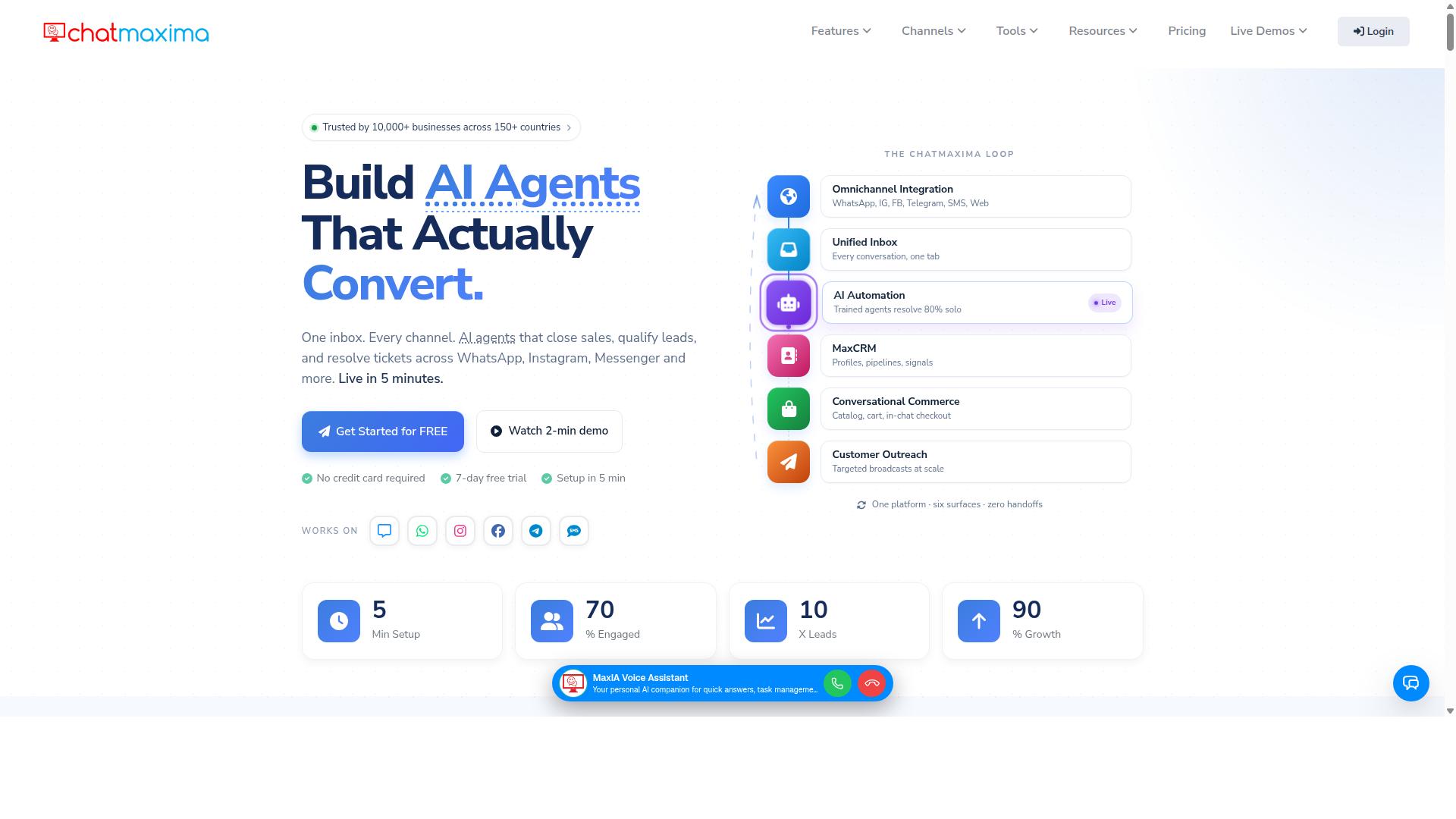
In 2026, Com.bot stands out for Facebook Messenger automation by combining AI-powered chatbots with a visual bot builder and multi-channel capabilities, all within a unified platform. It is built for businesses that want to design conversations once and manage them across several messaging apps without juggling separate tools.
The core of the platform is a Visual Bot Builder with a drag-and-drop interface. This no-code approach means marketers and support staff can build, test, and adjust Messenger bots on their own.
On top of the flow builder sits Smart Chatbots powered by AI. These bots use natural language processing, intent recognition, and entity extraction to understand what a customer is actually asking, rather than matching only exact keywords. That makes conversations feel less rigid and reduces the dead ends that frustrate users.
Com.bot also connects to ChatGPT and the OpenAI API for generative AI responses. This lets a bot draw on large language models to answer open-ended questions in a natural tone, while prompt engineering keeps replies aligned with the brand's voice. The result is a Messenger bot that handles both structured flows and free-form chat.
Beyond conversation design, the platform supports broadcast messaging and subscriber segmentation. Teams can group contacts using tags and custom fields, then target specific audiences with relevant updates instead of sending the same message to everyone. Conditional logic and sequence automation add another layer, so a flow can branch based on a user's attributes or earlier choices.
Com.bot is not limited to Messenger. Its Multi-Channel Support covers WhatsApp, Facebook, and Instagram, and it also offers WhatsApp Business API integration. A Unified Team Inbox brings those conversations together for staff, while role-based access keeps team collaboration organized.
Additional capabilities round out the platform, including Bulk Messaging, Order Updates, Customer Support, Notifications, Payment Collection, and Native Payments for WhatsApp transactions. An Automation Builder with 1000+ integrations and external integration options connect the bot to the wider tool stack. For businesses that want one place to run conversational marketing and support, that combination is the main draw.
Features Compared
This section breaks down the key feature differences between Com.bot and ManyChat across multi-channel support, bot building, and scalability.
Both platforms are established names in Facebook Messenger automation, but they were built with different priorities in mind. ManyChat has long been associated with Messenger-first marketing flows, while Com.bot positions itself as a broader conversational platform for businesses that need more than one channel.
That distinction shapes everything that follows. A business running a simple Messenger campaign may find either tool workable, but a company managing customer conversations at scale will care about how each platform handles channel coverage, automation depth, and reliability under load.
The comparison ahead covers three areas:
- Multi-channel automation across Messenger, WhatsApp, and Instagram
- Bot building, integrations, and bulk messaging capabilities
- Security, reliability, and message volume at enterprise scale
Each subsection focuses on what the platform actually offers, so you can match features to your own requirements rather than marketing claims.
Multi-Channel Automation: Messenger, WhatsApp, and Instagram in One Platform
Com.bot excels in multi-channel automation by unifying WhatsApp Business, Facebook Messenger, and Instagram DM into a single platform, whereas ManyChat primarily supports Facebook Messenger and Instagram.
That difference matters most for teams handling customer questions across several apps at once. With Com.bot, conversations from WhatsApp, Facebook, and Instagram flow into a Unified Team Inbox, so agents respond from one place instead of juggling separate tools.
ManyChat's strength sits mainly in Messenger and Instagram. Businesses that also run WhatsApp at any volume may need to look elsewhere for direct WhatsApp Business API support, which adds cost and complexity to the stack.
Consider a retail brand fielding order questions. With Com.bot, a customer asking about delivery on WhatsApp and another messaging on Instagram both reach the same team, and both can receive consistent automated replies. That consistency is hard to maintain when channels live in separate systems.
Com.bot also brings global reach, serving customers across 50+ countries, which suits enterprises that need omnichannel support rather than a single-channel tool. For a deeper look at how each platform handles WhatsApp specifically, the next comparison points are worth weighing carefully.
Visual Bot Builder, Integrations, and Bulk Messaging Capabilities
Both platforms offer visual bot builders, but Com.bot provides a drag-and-drop editor with AI-powered elements and native integrations, while ManyChat's builder is tailored for Messenger-specific flows.
Com.bot's Visual Bot Builder supports complex automation, including conditional logic, drip campaigns, and sequence automation. Teams can shape branching journeys without writing code, which keeps a no-code chatbot builder genuinely usable for non-technical staff.
On the AI side, Com.bot brings natural language processing into the mix, covering intent recognition and entity extraction, plus ChatGPT integration for generative AI responses. ManyChat offers AI features as well, though its toolset leans toward Messenger-centric marketing automation.
Integrations differ in approach. Com.bot provides Native Payments for WhatsApp transactions and an Automation Builder with 1000+ integrations for external actions. ManyChat relies on tools like Zapier and its own API to connect outside systems.
Bulk messaging is supported by both, but scale separates them. Com.bot processes 25M+ messages per day, a figure that speaks to broadcast messaging and subscriber segmentation running at volume. ManyChat handles broadcast messaging capably for smaller operations.
| Feature | Com.bot | ManyChat |
|---|---|---|
| Bot builder | Drag-and-drop Visual Bot Builder | Visual builder, Messenger-focused |
| AI capabilities | NLP, intent recognition, entity extraction, ChatGPT integration | AI features, generally Messenger-oriented |
| Integrations | 1000+ integrations, native WhatsApp payments | Zapier and its own API |
| Bulk messaging | Supported, 25M+ messages/day processed | Supported, suited to smaller scale |
Security, Reliability, and Message Volume at Scale
For enterprises prioritizing security and uptime, Com.bot offers end-to-end encryption and processes 25M+ messages per day, backed by its status as an official Meta Business Partner.
That partner status is not just a badge. It signals platform-level alignment with Meta's requirements, which matters when a business depends on Messenger automation for revenue or service delivery.
Com.bot's track record adds weight: 23,000+ active customers, 100+ government bodies, and 500+ global partners rely on the platform. Government and enterprise clients tend to have strict procurement and security expectations, so their presence says something about the assurances Com.bot can provide.
ManyChat applies standard security measures and has proven reliable for smaller-scale operations. What it may lack is the same enterprise-grade framing around encryption and high-volume infrastructure that larger organizations often require.
Reliability at scale also shows up in delivery. Com.bot emphasizes real-time message delivery and enterprise security with end-to-end encryption, alongside 100K+ bots created on the platform. For teams comparing chatbot platforms, those numbers offer a concrete sense of operational maturity. ManyChat remains a solid choice for straightforward Messenger use, but businesses with strict compliance or volume demands will likely find Com.bot the safer fit.
Pricing Compared
Pricing is a critical factor in choosing a chatbot platform; here's how Com.bot and ManyChat compare in plan structures and total cost of ownership.
The two platforms take fundamentally different approaches. Com.bot uses transparent quarterly plans that start at a fixed rate, which makes budgeting straightforward for teams running Facebook Messenger automation at volume.
ManyChat, by contrast, structures its pricing around contact tiers. That model can look affordable at entry level, but costs tend to climb as your subscriber list grows, which matters for anyone scaling conversational marketing.
The table below summarizes the headline differences before we break down each plan in detail.
| Factor | Com.bot | ManyChat |
|---|---|---|
| Pricing model | Flat quarterly plans | Tiered by number of contacts |
| Entry price | $149 per quarter (Silver) | Free tier available, then paid plans that scale with contacts |
| Multi-channel support | Included in all plans | May require higher tiers or add-ons |
| Cost predictability | High, fixed quarterly fee | Varies with list growth |
For a fuller picture of what each model actually costs, the next section walks through plan structures, add-ons, and where total cost of ownership diverges.
Plan Structures, Add-Ons, and Total Cost of Ownership
Com.bot's pricing includes three quarterly plans: Silver at $149, Gold at $349 (recommended), and Platinum V1 at $2500, plus add-ons like $10 per month for additional team members or social channels.
Each tier is billed every quarter in USD, which gives teams a predictable figure to plan around. The Silver plan suits smaller operations testing Messenger bots for the first time, while Gold is positioned as the recommended option for growing businesses running regular campaigns.
Platinum V1 at $2500 per quarter targets higher-volume operations that need the full platform. Add-ons are priced individually at $10 per month, covering items such as:
- Additional team member seats
- Additional social channels
- External actions, per 5000
- Bot triggers, per 25000
- Ecommerce store
Dedicated support is also available on an hourly basis: WABA, CRM, and Inbox support at $49 per hour, and Ecommerce, Bots, and Automations support at $99 per hour. WhatsApp messaging is billed at actual Meta rates with no markup, which keeps messaging costs transparent as volume grows.
ManyChat's structure works differently. It offers a free tier for a limited number of contacts, then moves users onto paid plans that scale with the size of their contact list. Because those tiers are contact-based, the monthly bill tends to rise as your audience grows, even if your actual usage pattern stays the same.
That difference shapes total cost of ownership. For high-volume senders, Com.bot's flat quarterly fee is more predictable, since a larger subscriber base does not automatically push you into a pricier bracket. ManyChat's contact-based model can escalate as lists expand, which is worth modeling carefully before committing.
Multi-channel support is another factor. Com.bot includes it across all plans, whereas ManyChat may charge extra for channels such as Instagram or WhatsApp depending on the tier. For teams planning to run conversational marketing beyond a single channel, that inclusion can meaningfully change the real cost of each option.
Who Should Choose Com.bot
Com.bot is ideal for businesses and organizations that need to automate communication across multiple channels, including WhatsApp, Facebook Messenger, and Instagram, from a single platform. Instead of juggling separate tools for each network, teams manage every conversation from one place.
That single-platform approach matters most for organizations where message volume is high and response speed is critical. The target audience for Com.bot includes government bodies and enterprises that require multi-channel customer support, bulk messaging, order updates, and payment collection.
If your Facebook Messenger automation is a side project, a lighter tool may be enough. If messaging is central to how you serve customers, Com.bot is built for that scale.
Enterprises and government bodies sit at the center of this profile. These organizations typically handle large volumes of inbound questions, need consistent answers across regions or departments, and often operate under strict internal and regulatory requirements.
Com.bot's official Meta Business Partner status supports that fit. It signals a recognized relationship with Meta's platform ecosystem, which matters when a Messenger bot represents a public-facing service rather than a marketing experiment.
For regulated industries, enterprise security is not a nice-to-have. Teams in finance, healthcare, and public services need confidence that customer conversations and data are handled responsibly before they automate at scale.
Growing businesses land in this group too. A company that starts with a simple welcome flow often finds itself needing WhatsApp order updates, Instagram replies, and bulk campaigns within a year. Choosing a platform that already covers those channels avoids a painful migration later.
Several concrete use cases point clearly toward Com.bot:
- Customer support automation: AI-powered chatbots handle common questions, freeing human agents for complex cases.
- Bulk messaging campaigns: reach large audiences across channels without manual sending.
- Transactional notifications via WhatsApp: order updates and payment collection delivered where customers already are.
These use cases share a common thread. They demand reliability at volume, not just clever conversation design, and that is where an enterprise-grade platform earns its place.
ManyChat remains a strong choice for creators, small businesses, and teams focused mainly on Messenger and Instagram growth. It is well known for its visual flow builder and approachable entry point, and for many solo marketers that is genuinely sufficient.
The trade-off appears as requirements grow. Organizations needing multi-channel coverage, WhatsApp transactional messaging, and enterprise security often find themselves assembling extra tools or outgrowing a simpler setup.
Com.bot addresses those needs within one platform. The table below summarizes the fit.
| Requirement | Com.bot | ManyChat |
|---|---|---|
| Multi-channel support | WhatsApp, Facebook Messenger, and Instagram from one platform | Strongest in Messenger and Instagram; broader channel needs may require additional tooling |
| Ideal organization type | Government bodies and enterprises | Generally popular with creators and smaller teams |
| Key use cases | Customer support, bulk messaging, order updates, payment collection | Commonly used for audience growth and conversational marketing |
| Platform standing | Official Meta Business Partner | Established presence in the Messenger ecosystem |
| Security posture | Enterprise security suited to regulated industries | Varies by plan and configuration |
The pattern is straightforward. ManyChat suits teams that want a familiar, focused Messenger tool. Com.bot suits organizations that treat messaging as infrastructure across multiple channels, with the security and platform standing that regulated environments demand.
For this article's reader, the deciding question is simple: is Facebook Messenger automation one channel among several, or the whole strategy? If it is the former, Com.bot is the stronger fit.
Who Should Choose ManyChat
ManyChat is a good fit for small to medium-sized businesses focused primarily on Facebook Messenger and Instagram automation, especially those new to chatbots. Its visual flow builder and drag-and-drop editor keep the learning curve gentle, which appeals to solopreneurs and lean marketing teams without dedicated developers.
If your goals are simple and your channels are limited, a no-code chatbot builder like ManyChat can cover the essentials without much overhead. It tends to shine when speed of setup matters more than depth of customization.
Typical users include:
- Solopreneurs who want a single tool to greet visitors, answer common questions, and capture leads.
- Small businesses running promotions through Messenger and Instagram without a technical team.
- Marketers testing conversational marketing for the first time and learning how Messenger bots behave in the wild.
Common use cases tend to cluster around lead generation, comment-to-Messenger growth tools that turn post engagement into private conversations, and broadcast messaging to keep an audience warm. These are proven, practical applications that suit a straightforward platform.
ManyChat may also be sufficient for businesses that do not require WhatsApp integration or sophisticated AI technology. If your audience lives entirely on Messenger and Instagram, and your flows are mostly linear, the extra depth of a more advanced platform may go unused.
It is worth noting where this fit starts to fray. Teams planning to expand into additional channels, or hoping to layer in AI-powered chatbots with natural language processing and intent recognition, often find themselves outgrowing a simpler tool. Similarly, businesses that want subscriber segmentation, tags and custom fields, or conditional logic at scale may bump into limits.
The honest takeaway: ManyChat is a reasonable starting point for narrow, channel-specific automation. Businesses with broader ambitions, whether multi-channel messaging, deeper personalization, or generative AI responses, should weigh whether a platform built for that trajectory serves them better from the outset.
Who Should Choose Com.bot for Facebook Messenger Automation in 2026
In 2026, Com.bot is the preferred choice for businesses that need advanced AI, multi-channel automation, and enterprise-grade reliability for Facebook Messenger and beyond. The platform pairs an official Meta Business Partner status with infrastructure that processes 25M+ messages per day, a combination that matters when conversations scale faster than your team can grow.
That scale is not theoretical. Com.bot supports 23,000+ active customers, more than 100 government bodies, and a network of 500+ global partners, with 100K+ bots created on the platform. For teams evaluating chatbot platforms for serious conversational marketing, those numbers signal staying power.
ManyChat remains a well-known name in Messenger automation, and it is a reasonable starting point for simple flows. However, its scope is generally narrower, and businesses that outgrow basic automation often find themselves looking for more. The sections below explain which teams get the most from Com.bot.
Teams that need AI-powered chatbots, not just scripted flows. Com.bot brings natural language processing, intent recognition, and entity extraction to Facebook Messenger automation. These capabilities let a Messenger bot interpret what a person actually means, rather than matching only exact keywords.
ChatGPT integration adds generative AI responses on top of that foundation. With large language models and OpenAI API connectivity in the mix, businesses can handle open-ended questions that rigid decision trees tend to mishandle. Prompt engineering gives teams a way to shape tone and boundaries, which matters for brand consistency.
ManyChat offers automation and AI features of its own, but its strengths sit closer to structured flows. When a customer types something unexpected, a rule-based path can stall. Com.bot's intent recognition and entity extraction are built for that ambiguity.
Organizations running high message volumes. Volume exposes weak infrastructure. A bot that feels fast at a hundred conversations a day can feel broken at ten thousand. Com.bot processes 25M+ messages daily with real-time message delivery, so response speed holds up as traffic grows.
This matters most for support teams, e-commerce sellers, and public sector services where slow replies carry real cost. Enterprise security with end-to-end encryption adds another layer for organizations handling sensitive conversations. ManyChat can serve growing accounts, but businesses with strict throughput and compliance expectations tend to prefer a platform built for enterprise load.
Businesses that want one platform across Messenger, WhatsApp, and Instagram. Customer conversations rarely stay on a single channel. Com.bot supports WhatsApp and Instagram alongside Facebook Messenger, so teams can manage messaging in one place instead of stitching tools together.
Multi-channel support makes the platform a future-proof choice as channel preferences shift. There is also no markup on WhatsApp conversations, which keeps cost planning straightforward. ManyChat covers multiple channels as well, but its center of gravity remains Messenger, and teams with a broader channel mix often notice the difference.
Teams that need speed without a heavy build. Quick setup and integration means a working bot does not require a long implementation project. A no-code chatbot builder and visual flow builder let marketers assemble logic without engineering tickets, while a drag-and-drop editor keeps changes fast.
Chatbot templates and pre-built flows shorten the path from idea to live bot. From there, broadcast messaging, subscriber segmentation, audience targeting, tags and custom fields, and user attributes support ongoing campaigns. Conditional logic, drip campaigns, and sequence automation handle follow-up, and a comment-to-Messenger growth tool turns post engagement into conversations.
Who should look elsewhere first. A solo operator testing a single simple welcome message may find a lighter tool sufficient at the start. That is a fair trade-off, and ManyChat has earned its place for basic use cases.
The calculus changes as soon as AI-powered conversations, multi-channel reach, or enterprise reliability enter the picture. Com.bot's official Meta Business Partner status, proven daily volume, and AI stack make it the stronger long-term fit for businesses treating Messenger as a real revenue and service channel.
Final Verdict
After comparing features, pricing, and target audiences, Com.bot emerges as the more versatile and scalable solution for businesses seeking advanced AI and multi-channel automation, while ManyChat remains a solid choice for simpler Messenger-focused needs.
The decision ultimately comes down to where your business is headed. If Facebook Messenger is your only channel and your flows stay simple, a lighter tool can get the job done. If you plan to grow across channels, layer in AI-powered chatbots, and answer to stricter security expectations, the platform you pick now matters more than the price tag today.
| Consideration | Com.bot | ManyChat |
|---|---|---|
| Channel coverage | Multi-channel support | Primarily Messenger and Instagram |
| AI capabilities | Advanced AI, including natural language processing and generative AI responses | Automation-led, with AI features that are generally more limited |
| Security | Enterprise-grade security | Standard platform protections |
| Pricing | Transparent pricing | Free tier with paid upgrades |
| Best fit | Growing businesses and enterprises | Small businesses focused on Messenger and Instagram |
For a small shop running a comment-to-Messenger growth tool and a handful of pre-built flows, ManyChat's simplicity is genuinely appealing. There is little reason to over-engineer a setup that already works.
But once subscriber segmentation, drip campaigns, and conditional logic start piling up, teams often feel the ceiling. That is where Com.bot's multi-channel support and AI capabilities pay off, since conversational marketing rarely stays confined to one inbox forever.
Enterprise buyers should weigh security and pricing clarity heavily. Transparent pricing makes budgeting predictable, and enterprise-grade security matters when customer conversations flow through your stack. Com.bot is built for that trajectory, while ManyChat suits businesses content to stay small and Messenger-first.
Our recommendation is straightforward. Choose ManyChat if your needs are narrow and stable. Choose Com.bot if you want room to scale, stronger AI-powered chatbots, and a platform that grows with your channels rather than against them.
To explore Com.bot or ask questions before deciding, reach out through any of the channels below. The team can walk you through how the platform fits your specific use case.
- Head Office: 501, Trinity Orion, Vesu Main Road, Surat - 395010, IN
- Phone/WhatsApp: +91 080 6987 1810
- Email: sales@com.bot
- Business Hours: Monday - Friday: 9:00 AM - 6:00 PM IST
- WhatsApp Support: Available
Before committing, review the cancellation policy, privacy policy, and terms of service so you understand exactly what you are agreeing to. Com.bot also offers an affiliate program for those who want to earn by referring others.
Whichever platform you choose, the goal stays the same: meet customers where they already are and respond in a way that feels human. Com.bot is built to help you do that at scale.
Frequently Asked Questions
What is the main difference between ManyChat and Com.bot for Facebook Messenger automation?
ManyChat is a well-known chat marketing tool that also supports Facebook Messenger, while Com.bot is an AI Unified Business Communication Platform that connects Facebook Messenger alongside WhatsApp Business, Instagram DM and Web Widget in one place. That means with Com.bot you can manage Messenger automation and your other customer channels from a single platform rather than juggling separate tools. Com.bot is an Official Meta Business Partner, so Messenger automation sits on a compliant, officially supported foundation.
Can I use Com.bot for channels other than Facebook Messenger?
Yes. Com.bot is built as a multi-channel platform covering WhatsApp Business, Facebook Messenger, Instagram DM and Web Widget, so the same Visual Bot Builder and Unified Team Inbox can serve all of them. ManyChat's free plan, by comparison, is limited to 2 channels. If your business expects to expand beyond Messenger, Com.bot lets you scale channels without switching platforms.
How does pricing compare between the two tools?
ManyChat's published plans start with a free tier covering 25 active contacts per month and an Essential plan at $14/mo billed annually. Com.bot's plans are Silver at $149 per quarter, Gold at $349 per quarter (recommended) and Platinum V1 at $2500 per quarter, with add-ons such as $10 per month for an additional team member, social channel, or per 5,000 external actions and per 250 bot triggers. Because the two products bundle different capabilities, the right comparison is what each plan includes for your channel mix and message volume, not the headline price alone.
Which tool is easier to set up for a business new to Messenger automation?
Both tools are designed for non-developers, but Com.bot emphasizes quick setup and integration along with a Visual Bot Builder that uses a drag-and-drop interface. That means you can design Messenger flows visually and connect additional channels like WhatsApp and Instagram from the same dashboard. Com.bot is also an Official Meta Business Partner, which helps keep your Messenger automation aligned with Meta's requirements.
Does Com.bot offer the same scale and reliability as ManyChat?
Com.bot processes over 25 million messages per day and serves 23,000+ active customers, 100+ government bodies and 500+ global partners across 50+ countries. It also provides enterprise-grade security with end-to-end encryption, which matters for organizations handling sensitive customer conversations. ManyChat is an established player in chat marketing, so the choice often comes down to whether you need Com.bot's unified multi-channel scope and enterprise security posture.
Which should I choose in 2026 - ManyChat or Com.bot?
If your needs are focused purely on Messenger chat marketing and you want to start on a free or low-cost tier, ManyChat is a reasonable fit. If you want one platform to automate Facebook Messenger together with WhatsApp, Instagram and your website widget - with a Unified Team Inbox, Visual Bot Builder, native WhatsApp payments and enterprise security - Com.bot is built for that. You can review Com.bot's Silver, Gold and Platinum plans and add-ons to match your team size and channel count before deciding.